When Sympathy Isn’t Enough: How Do We Stop Radicalisation Before It Takes Democracy Down With It?
Posted on February 17, 2026
I don’t pretend to have the answers to this complex question. In fact, the older I get the more I realise how little I know about the “right” way to deal with people who’ve fallen headfirst into far-right cultism. People I used to like and respect are getting sucked into it. It’s fucking depressing.
I do know this: if enough people get radicalised, they could help drag the civilised world and democracy down with them. Then talking about them as the victims won’t seem so clever.
That’s not Bob Lethaby getting melodramatic. That’s history folks.
Do You Reach Out?
A lot of people who end up in that space don’t start there (obviously). They’re angry about something. Or fed up with being old and less relevant in a rapidly changing world. Or they feel completely ignored and left behind. Then along comes a steady stream of videos, memes and posts telling them exactly who to blame and offering them relevance and an angry tribe to belong to.
It’s powerful stuff when you look at it that way.
So part of me thinks the answer has to be sympathy. If someone feels unheard, maybe the worst thing you can do is sneer at them. If you mock them straight away, you probably just confirm what they’ve been told: that the “other side” think they are simply thick fuckers (guilty, your honour).
If you care about someone, surely you try to keep the line open. You ask questions. You listen then gently challenge. You try to remind them of the decent person they were before algorithms and outrage merchants got their claws in. That kind of feels human. It feels almost constructive. I’m not sure I am capable of it but I might give it a crack.
Or Do You Call It Out?
But if I am honest, here’s where I struggle.
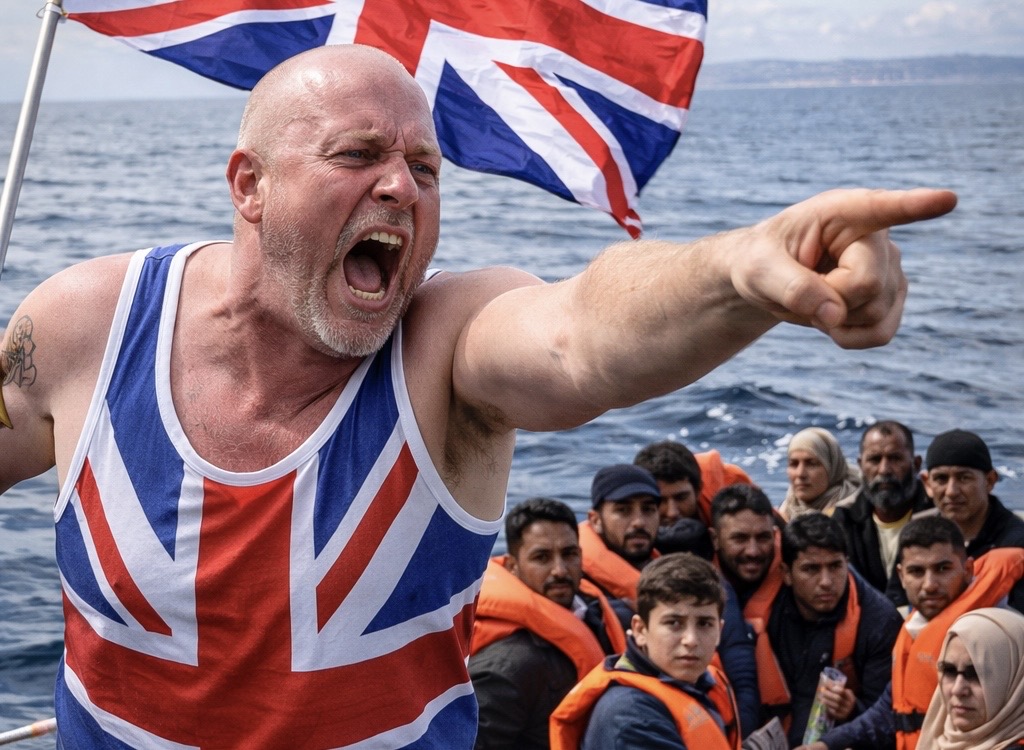
Some of the stuff that comes out of these movements isn’t just “a different opinion”. It’s dehumanising. It’s authoritarian. It chips away at basic democratic principles and human rights that we take for granted. It blames whole groups of people for complex problems. It normalises cruelty. Many of us having seen the laughing emojis when people drown in the English Channel. I never thought I’d know people who thought drowning is something to laugh at.
At what point does patience come to a point when you anre indulging in these people?
If someone is openly supporting ideas that would undermine democracy or strip rights from others, is it enough to nod thoughtfully and say, “Hey mate, I see why you feel that way, it’s normal”?
Surely not. Some ideas need to be firmly challenged don’t they? Some claims need to be called out as utter nonsense. And yes, sometimes the sheer absurdity of conspiracy thinking deserves to be laughed at in my opinion. Authoritarian movements like to look strong and inevitable. Laughter can puncture that balloon pretty quickly.
The Bigger Fear
What really worries me isn’t one bloke on Facebook shouting at hotel. It’s the scale of this madness. Is this what Germany was like in 1936? People forgiving Hitler cultists for their absurd behaviour?
If there are enough people convinced that democracy is weak, that strongmen are the answer, that minorities are the problem, that facts are optional and force is justified… then democratic systems don’t just wobble. They crack and then it gets uglier than any of us born since 1945 can imagine.
History shows us that civilised societies aren’t as indestructible as we like to think. They rely on a shared belief in rules, fairness and basic human decency. Once that shared belief erodes, things unravel far faster than you can say “some of what Farage says is true”.
That’s the bit that keeps me awake. Not winning an argument online with an illiterate. Not scoring points against some thug who laughs at a picture of a brown kid drowning. But the thought that normalising extreme thinking could have real-world consequences.
Maybe It’s Both
I genuinely don’t know the perfect approach.
Maybe in private, with people we love, sympathy is the only way forward. Keep talking. Keep nudging. Refuse to cut them off unless you absolutely have to.
And maybe in public, where ideas spread and influence others, need to force ourselves be clearer and firmer. Call out the bullshit. Defend democratic values. Make it obvious that cruelty and authoritarianism aren’t just “another side of the debate”. They are a vindictive attitude that has no place in a democracyWhat I do know is this: ignoring it isn’t an option, not for me anyway. Pretending it’s all harmless venting isn’t an option in my world. Why should I stand for that? If enough people slide into that mindset, they won’t just harm themselves. They’ll take institutions, norms and maybe democracy itself down with them.
No, I don’t have the blueprint for fixing it. But I do think we need to take it seriously, stay human, and at the same time draw a line where it really matters.
Because currently the stakes are bigger than any one argument.
We’re at that point in history…again.
- S Prev
- s
Got something to say?