Are Weather Models Having a Bit of a Moment?
Posted on March 30, 2026
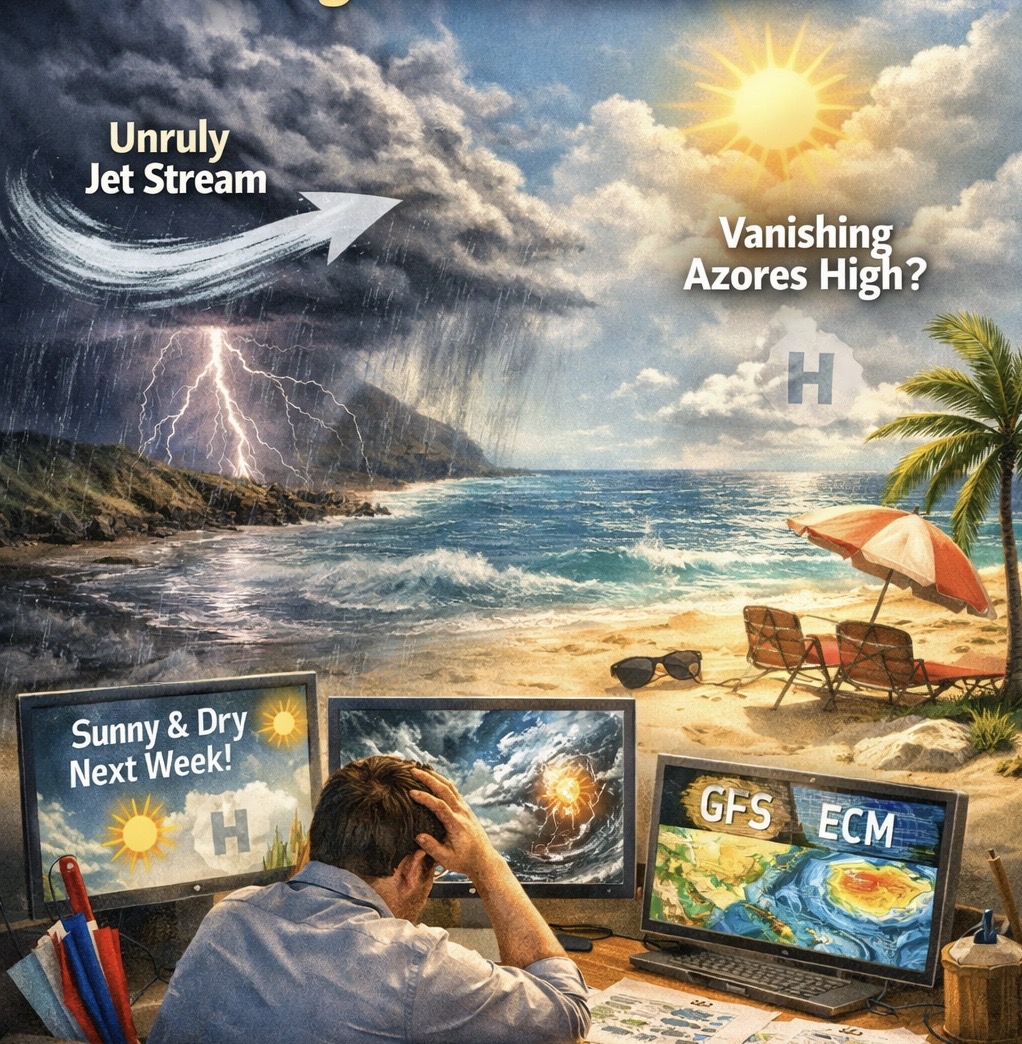
Lately, weather forecasts have started to feel a bit like that friend who definitely said they’d be there at 7 and rolls in closer to 8:30 with no real explanation. Rain arrives early, sunshine disappears, storms overperform or don’t turn up at all. It’s enough to make anyone wonder if the models are slipping.
At the centre of it all are the forecasting heavyweights like the Global Forecast System (GFS) and the ECMWF model (ECM), run by organisations such as the National Oceanic and Atmospheric Administration (NOAA). These systems process enormous amounts of atmospheric data and usually do an impressively accurate job. Recently though, they have looked just a little too hopeful.
The Jet Stream Is Not Playing Along
Much of the blame seems to point skyward, specifically at the jet stream. This fast moving ribbon of air high above the Atlantic is the steering wheel for UK weather. When it behaves, forecasts line up nicely. When it does not, everything becomes harder to predict.
Recently the jet stream has been unusually lively, shifting position, strengthening at short notice and generally refusing to stay still. That makes life difficult for even the most advanced models.
The Case of the Disappearing High
Then there is the great tease of high pressure. Time and again, forecasts have hinted at calmer, sunnier weather just a few days ahead. You will see talk of blocking patterns forming or the Azores High building in to save the day.
And then it simply does not happen.
The high gets pushed away, the jet stream powers back in, and the promised sunshine quietly disappears. It has become a familiar cycle where hope builds in the forecast and then fades just as quickly. If weather forecasts had a personality, this would be the classic “on my way” message sent while still at home.
A More Energetic Atmosphere
Part of the explanation may lie in the bigger picture. A warming climate means more energy in the atmosphere. Warmer oceans release more heat and moisture, which can make weather systems more active and less predictable.
In that kind of setup, stable high pressure becomes harder to establish and easier to break down. The atmosphere is not necessarily behaving badly, it is just behaving differently.
The Models Are Not Broken
It is important to say that the models themselves are not suddenly worse. In fact, they are better than ever overall. The challenge is that they are now trying to predict an atmosphere that may be more chaotic than before.
Small errors can grow faster, patterns can shift more quickly, and those calm spells can slip away at the last minute.
The Bottom Line
Weather models have not lost the plot. They are dealing with a jet stream that is more unpredictable and an atmosphere that is full of extra energy. The Azores High may still bring settled weather at some point, but for now it seems to be keeping its distance.
Until then, it is probably wise to treat any promise of sunshine with a bit of caution and keep the umbrella close by.
- S Prev
- s
Got something to say?