Did the Smoking Ban Kill the British Pub? Not Even Close
Posted on March 28, 2026
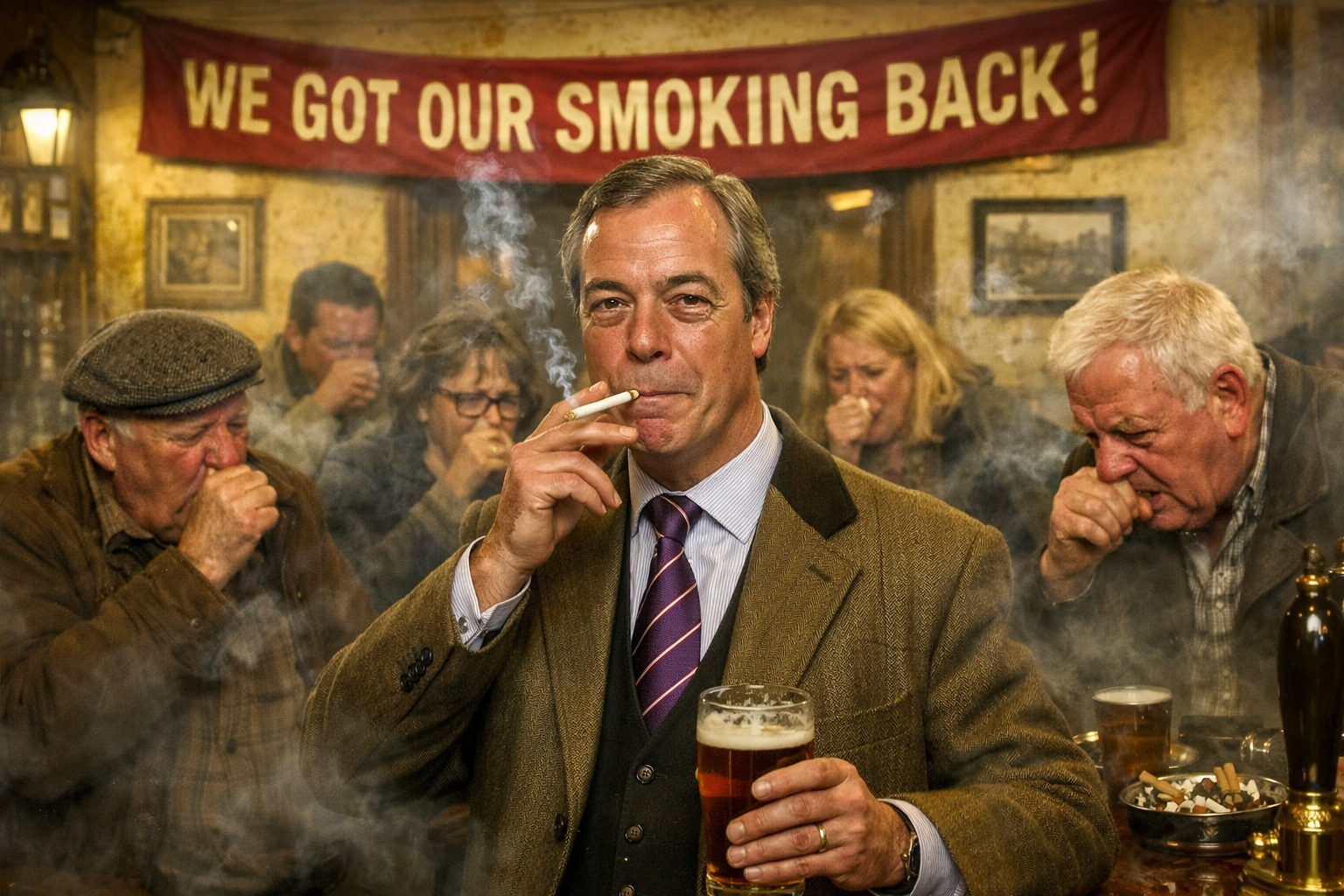
There is a populist idea that the smoking ban swooped in during 2007, stubbed out a cigarette, and took the entire British pub industry down with it. It is a neat, simple explanation. It also has the slight inconvenience of being complete bollocks. The decline had already been well underway, but blaming one visible policy is much easier than acknowledging years of slow, unglamorous economic reality.
The truth, as ever, is less dramatic and a bit more quintessentially British. Pubs were not dramatically slain. They were slowly squeezed, nudged, and financially strangled over time until many simply “for fuck this as a way of making money”, and gave up the ghost.
A View From Behind the Bar
My mum ran a pub from 1997 to 2002. To anyone walking in, it looked like a reasonable success. Busy nights, regulars propping up the bar, that warm “local” atmosphere people still talk about as if it was some sort of golden era.
Behind the scenes, it was less “Cheers” and more “constant low-level financial anxiety.” Rents crept up, the brewery tie meant paying over the odds for stock, and after five years of hard graft she walked away with about £30,000 after no proper wage was ever taken. She only survived because my dad was a good bookkeeper and all us kids had flown the nest, so overheads were low.
Which, when you break it down, is not much, but better than being going into retirement having to sell the family home. But in reality, the kind of utopia where you work all hours, earn very little, and eventually escape with just enough money to wonder why you bothered in the first place.
The next tenants did not last. They got in a financial pickle and the pub went bust in 2004, three years before the smoking ban. So unless the ban was operating via some sort of pre-emptive strike from the future, it is safe to say other factors were already doing the damage.
What Was Really Changing
By the early 2000s, pubs were already under serious pressure. Supermarkets had made alcohol so cheap that staying in became the financially responsible choice. Why spend a small fortune on a pint when you can get a crate for the same price and drink in your own living room without having to queue at the bar or shout over someone ranting on about Enoch Powell having the right idea?
Costs, meanwhile, kept climbing. Wages, energy bills, business rates. Everything went up, except people’s willingness to spend more on a night out. You don’t have to be a scientist studying rockets to work it out.
Then there were the big pub companies, locking tenants into expensive supply deals while leaving them to carry most of the risk. In many cases, pubs became unviable on paper even if they still had customers. Add in the fact that the land was often worth more than the business itself, and suddenly a block of flats starts to look like a far more sensible investment than keeping Dave and his mates in lager. Many people and businesses deliberately ruined pubs to convince the powers that be that a change of use was the only option.
The Sofa Started Winning
Another thing that quietly changed the game was what was happening at home. The rise of the internet, streaming, gaming and hundreds of TV channels meant people suddenly had far more entertainment options without leaving the house.
Sport? On demand. Films? Endless. Box sets? Entire weekends gone without moving. Whatever your demographic, there is now something tailored specifically to keep you on the sofa, especially in the winter months when you might not even see your neighbours until March.
Compare that to going out in the pissing rain, standing three deep at a bar trying to get served, and it is not hard to see why the balance slowly shifted. The pub used to be where the entertainment was. Now it is competing with a living room that has better choice, better comfort, and no closing time.
Smoking Declined Too
One slightly awkward detail for those blaming the smoking ban is that fewer people actually smoke now. Around 20 years ago there were roughly 10 to 11 million smokers in the UK. Today that is closer to 6 million.
That is a drop of around 4 to 5 million people. Smoking has gone from something like one in four adults to closer to one in ten. That is not a minor trend, it’s is a complete cultural shift. And a good one, surely? I’m glad I jacked it in.
Even many smokers do not particularly want to sit in a smoke-filled room while eating. The idea that millions of people are just waiting for the chance to return to nicotine fogged pubs is, at best, wishful thinking. I mean, what good would it do other than clog up lungs and the NHS?
Changing Attitudes to Drinking
Attitudes to alcohol have changed as well. There was a time when popping out for a couple of pints at lunch and heading back to work was considered fairly normal behaviour. Today, that would be described as “a disciplinary meeting waiting to happen.”
Drink driving is taken far more seriously, both legally and socially. Most people now understand that mixing alcohol and driving is not just frowned upon but outright dangerous. Get caught and you are no longer the butt of barstool banter, you’re a bit of a cunt.
Employers have also tightened things up, especially in industries like construction and manufacturing where mistakes can have serious consequences. Turning up to operate machinery or work on a building site after a couple of drinks is no longer shrugged off as ,“Fuck me, I see ol’ Mick’s had few, he can hardly steer that JCB”. It is a fast track to getting someone hurt or worse. Unsurprisingly, that has put a dent in the once reliable lunchtime pint crowd.
The Pubs That Survived
The pubs that are still doing well today have not survived by pretending it is still 1995. They have adapted. They focus on food, cater to families, and offer more than just a place to drink.
They are often in areas where people have the money to spend, and they have diversified into events, accommodation, and anything else that keeps customers coming through the door. In short, they have evolved into modern hospitality businesses.
Reintroducing smoking into these environments would not revive them. It would more likely send a good portion of their customers elsewhere, probably back to their sofas with Netflix and a reasonably priced bottle of wine.
Nostalgia Is Not a Business Plan
There is a strong sense of nostalgia attached to the old style pub. Smoky rooms, cheap pints, and a tight knit community. It is a lovely image, but like most nostalgia, it quietly ignores the inconvenient bits.
Even back then, many pubs struggled. Margins were tight, hours were long, and success was never guaranteed. The idea that everything was thriving until one policy came along is more comforting than it is accurate.
So when populist politicians like Nigel Faraage suggest scrapping the smoking ban, it feels less like a serious economic plan and more like an attempt to sell a version of the past that never quite existed. He loves doing that and in fairness, he knows his base. The barstool bullshitter wearing rose tinted glasses.
Pubs Did Not Die. They Evolved
The British pub has not disappeared. It has changed, adapted, and in many cases improved. The decline was not caused by a single event but by a mix of economic pressure and shifting social habits. Every statistic I have googled and got of AI backs that up.
Blaming the smoking ban is easy. Understanding what actually happened takes a bit more effort. It is also, slightly inconveniently, much closer to the truth.
Not that Nige cares about the truth.
- S Prev
- s
Got something to say?