When Managers Become More Interesting Than Football
Posted on March 25, 2026
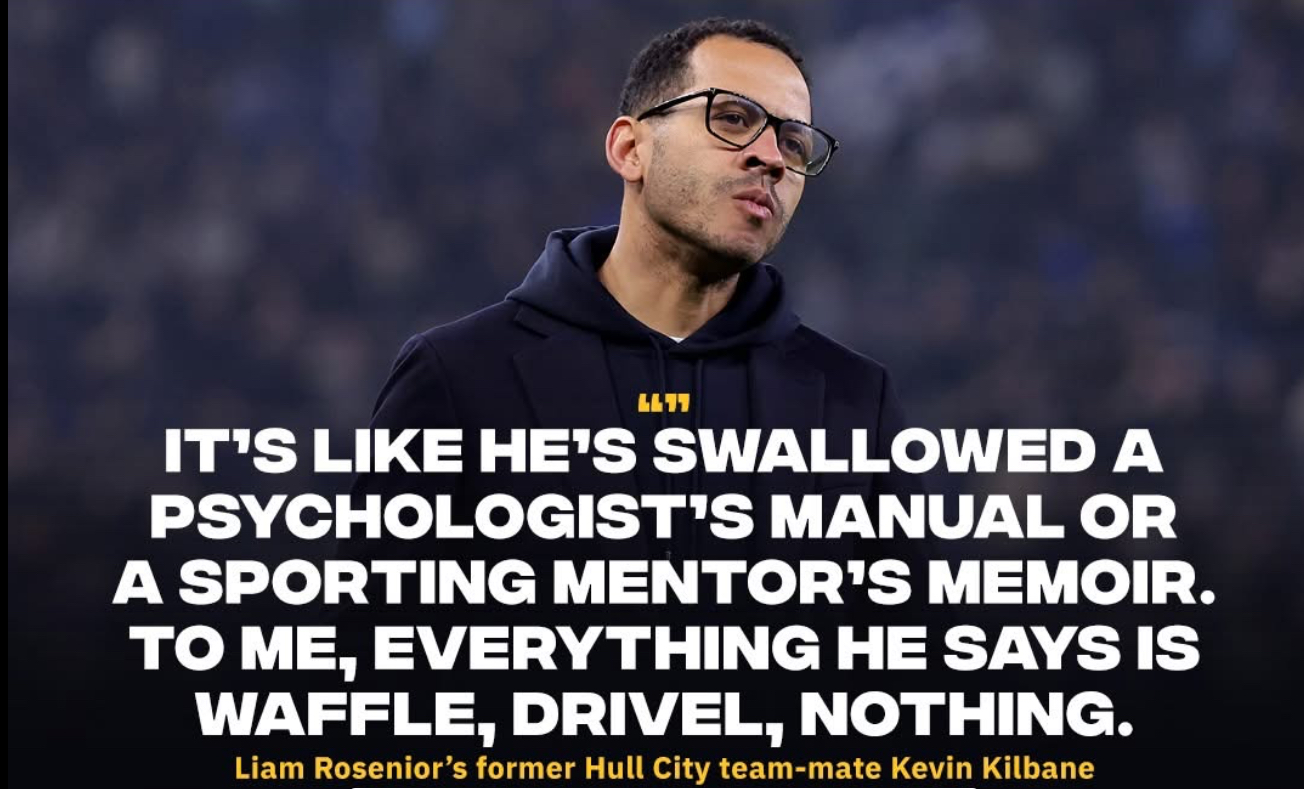
I’ve reached a slightly worrying point as a football fan. I now find managers more intriguing than the games themselves. The touchline, the interviews, the small details of behaviour and language have started to hold more interest than the actual ninety minutes.
Not all managers are the same, of course. Some can spark a short-term bounce that lifts a struggling side almost overnight. Some build something lasting with a clear identity that supporters can recognise for years. Others quietly create stability and keep things ticking along without much fuss. These are very different skills, and the best managers tend to know exactly which one they are and lean into it.
The common thread, though, is clarity. You can watch their teams and understand what they are trying to do without needing a tactical explainer video afterwards. That, increasingly, feels like a rarity in the modern game.
The Rise of the “Thinking Man’s Manager”
When I first heard Liam Rosenior speak, my immediate thought was simple. What on earth is he talking about? It was not that he lacked ideas, but that everything seemed wrapped in layers of language that made a straightforward point feel unnecessarily complex.
He came across as overly intellectual, like someone determined to prove how clever he is rather than explain how his team actually plays. The kind of voice you might expect to find on LinkedIn, discussing “leadership ecosystems” and “high performance cultures” while somehow avoiding anything concrete about what happens on the pitch.
There is a performative element to it that is hard to ignore. You can almost picture the notebook, the diagrams, the long explanations that leave everyone nodding politely while quietly wondering what the actual plan is. If football management is a spectrum, Mike Bassett sits comfortably at one end with his no-nonsense simplicity. At the other end sits this new breed of hyper-articulate, theory-heavy managers who seem determined to turn a simple game into something far more complicated than it needs to be.
When Talking Becomes the Tactic
There is also a growing sense that, for some managers, the talking has started to become part of the performance rather than a reflection of it. Press conferences and interviews are no longer just about explaining decisions. They can feel like auditions, as though the manager is presenting an idea of themselves as much as their team.
This is where things begin to drift. When the language becomes more important than the football, it creates a disconnect. Supporters are left trying to decode what they have just heard, while players are expected to translate that into something meaningful on the pitch.
The best managers rarely fall into this trap. They might be articulate, even insightful, but their words tend to clarify rather than obscure. You come away knowing more, not less. That is a subtle but important difference.
The Beauty of Simplicity
During a brief and rather glorious spell when my team were actually good, Steve Coppell showed what clarity looks like in practice. There was nothing mysterious about his approach, and that was precisely the point.
His Reading side was not complicated. It was a straightforward 4-4-2, with players operating in positions that suited them and made the most of their strengths. The recruitment made sense as well. He signed players he could afford, but more importantly, players who were committed and understood their roles within the team.
You could watch them and immediately understand what they were about. There was no confusion, no sense of players being forced into unfamiliar roles, and no need for lengthy explanations about the system. It worked because it was logical, and because everyone involved seemed to buy into it.
Coppell’s downfall was not tactical naivety but simple reality. He did not receive the financial backing needed to sustain that level, and Reading were never going to be a natural home for elite players. Even so, that period had a clear identity. “The Reading Way” might have been short-lived, but it was easy to recognise and, more importantly, easy to enjoy.
Square Pegs and Clever Ideas
This is where modern managers like Rosenior can become frustrating to watch. There is a growing sense that some are willing to put square pegs in round holes just to demonstrate their intelligence and justify their approach.
You see full-backs drifting into midfield, wingers asked to play as wing-backs, and centre-halves stepping into roles that do not suit their natural game. It all sounds very clever in theory and looks impressive on a whiteboard, but in practice it often creates uncertainty.
Players begin to look unsure of themselves, as though they are thinking too much rather than reacting instinctively. Fans, meanwhile, are left trying to piece together what the team is actually attempting to do. Instead of clarity, you get a kind of tactical noise where everything feels slightly off.
Rosenior, at least from the outside, looks like a manager caught in that trap. There is a sense that the explanation has become more important than the execution, and that the performance off the pitch is starting to overshadow what happens on it.
Identity Is Not a Buzzword
“Identity” is one of those words that gets used constantly in modern football, often to the point where it starts to lose meaning. Every manager talks about it, every club claims to be building it, and yet very few teams actually display it in a way that is obvious.
A real identity is not something you need to explain. It is something you can see. It shows up in how a team defends, how it attacks, how it reacts under pressure, and how consistent those behaviours are from week to week.
The problem comes when identity is treated as a concept rather than a practice. It becomes something that exists in interviews and presentations rather than on the pitch. At that point, it stops being useful and starts to feel like another layer of noise around the game.
The Teams That Actually Win
The irony in all of this is that the most successful teams in recent years are rarely the ones that feel the most complicated when you watch them. In fact, the opposite is often true.
When you watch the best sides, you can usually describe their approach in a sentence or two. They press aggressively, they move the ball quickly, they control space well, and they play to the strengths of their best players. There is sophistication beneath the surface, of course, but it does not feel confusing or inaccessible.
The players understand it, which allows them to play with confidence and purpose. The fans understand it too, which creates a stronger connection between the team and the people watching. That shared understanding is what builds identity, and identity is what sustains success over time.
Football Is Not That Complicated
There is nothing wrong with intelligence in football. The game has evolved, and the best managers are clearly sharp, thoughtful people who spend countless hours refining their ideas. Tactics matter, and innovation has its place.
But there is a difference between intelligence and overcomplication, and the line between the two can be surprisingly thin. The performative note-taking, the jargon, and the sense that everything needs to sound profound can sometimes feel like a distraction from what actually matters.
Football is not chess. It is a simple game at heart, even at the highest level. Put good players in positions that suit them, give them a clear and coherent plan, and allow them to execute it with confidence.
More often than not, the teams that do those basics best are the ones that win. And the ones that do not tend to spend a lot more time explaining themselves than actually convincing anyone.
- S Prev
- s
Got something to say?