View From the Chaise Lounge: The Underrated Brilliance of England’s Greatest Striker
Posted on October 8, 2026
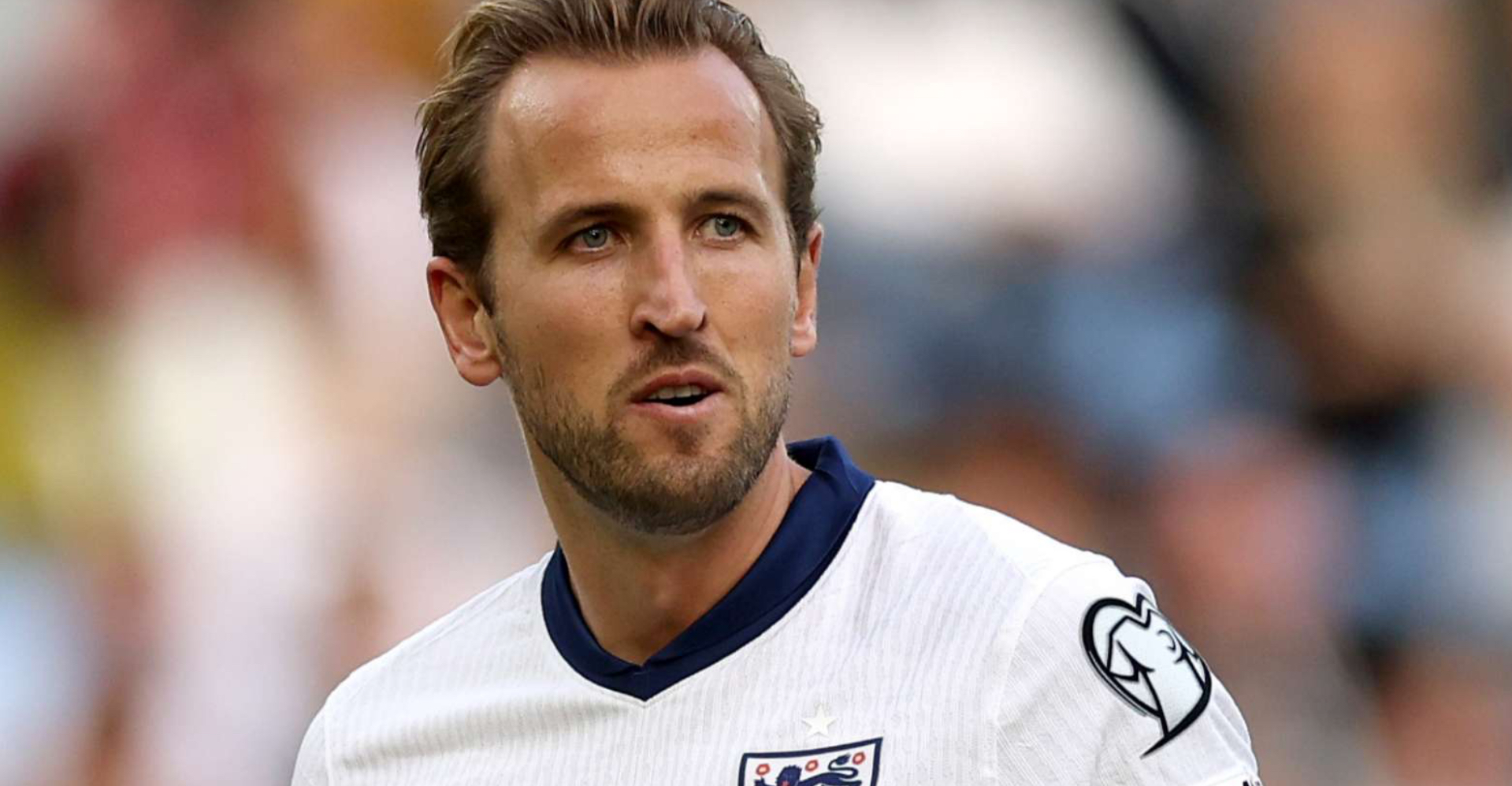
Goals, assists, records and an extraordinary ability to improve with age. At what point do we finally accept that Harry Kane is genuinely world class?
There is something quite extraordinary happening with Harry Kane. At an age when most strikers are beginning to lose a yard of pace, drop deeper to conserve energy and contemplate the lucrative business of winding down their careers in the Middle East, Kane appears to be getting better.
The goals keep coming, the assists keep stacking up and his overall contribution to the game seems to improve with every passing season. He is no longer simply a goalscorer. He is a playmaker, a creator, a leader and one of the most intelligent footballers England has ever produced.
And yet, remarkably, there are still people who question whether he is genuinely world class.
Apparently, until he wins a World Cup, he cannot enter that particular club.
What absolute bollocks.
Since When Did Winning a World Cup Define Greatness?
Johan Cruyff never won a World Cup. Neither did George Best, Eusébio, Alfredo Di Stéfano or Michel Platini.
Are we seriously suggesting that these players were somehow inferior to the hundreds of footballers who happened to be members of World Cup-winning squads?
Take Argentina’s 1986 World Cup-winning team. Everybody remembers Diego Maradona, partly because he was a genius and partly because he famously punched England out of the competition before scoring one of the greatest goals in football history.
But how many people can name the other ten Argentinians who started that infamous quarter-final?
Nery Pumpido? José Luis Cuciuffo? Ricardo Giusti? Julio Olarticoechea? They hardly roll off the tongue.
All World Cup winners, all good footballers, but would anyone seriously suggest they occupied a higher level of footballing greatness than Cruyff or Best simply because they happened to share a dressing room with Maradona?
Of course not.
Winning a World Cup is a magnificent achievement, but it is a team achievement. It depends on the quality of the other ten players, the manager, injuries, the opposition and sometimes a substantial slice of good fortune.
Or, in Maradona’s case, a little assistance from God.
To judge an individual player’s greatness solely on whether his country wins the World Cup is ridiculous.
The Numbers Are Becoming Absurd
Harry Kane now has 91 goals in 125 appearances for England.
Just think about that.
Sir Bobby Charlton’s record of 49 England goals stood for 45 years before Wayne Rooney finally broke it in 2015. Rooney eventually retired with 53, an extraordinary achievement that many assumed would stand for another generation.
Kane has already scored 38 more than Rooney and is now just seven goals away from doubling Charlton’s famous tally. These are extraordinary stats.
His international scoring rate is comfortably above 0.7 goals per game. For decades, a striker averaging a goal every two games was regarded as operating at the highest level of consistency. Kane has taken that benchmark, thrown it in the bin and wandered off to score another couple.
And the statistics at club level are scarcely believable either.
Last season, at Bayern Munich, Kane scored 61 goals in 51 competitive appearances. That included 36 Bundesliga goals and another 14 in the Champions League. He also contributed seven assists.
Sixty-one goals. In one season. At 32 years old.
These are not the numbers of a decent striker enjoying a purple patch. They are the numbers of a footballer operating at the very highest level of his profession.
What makes it more remarkable is that goalscoring is only part of his game. Kane can drop into midfield, collect possession, turn and deliver a 40-yard pass that would have Kevin De Bruyne nodding in appreciation.
His vision, passing, positional awareness and ability to bring others into play have developed to the point where he sometimes looks like a world-class midfielder who happens to score 40 or 50 goals a season.
Not bad for someone who was once regarded as a slightly cumbersome young forward being loaned out to the likes of Leyton Orient, Millwall, Norwich and Leicester.
But Is He One of the Very Greatest?
This is where I think we need to make a distinction.
There is world class, and then there are those extraordinary footballers who appear to operate in a different dimension altogether.
Zinedine Zidane, Lionel Messi, Cristiano Ronaldo, Ronaldinho, Marco van Basten and, in the modern game, Kylian Mbappé.
These are footballers capable of producing moments that make you wonder whether everyone else is playing the same sport.
Is Harry Kane in that category?
Perhaps not. He doesn’t possess the outrageous acceleration of Mbappé, the mesmerising feet of Messi or the almost supernatural elegance of Zidane.
But that doesn’t make him anything other than world class. It simply means he may not belong in that tiny group of footballers who transcend even the highest standards of the game.
There is no shame in that.
You can be a truly magnificent footballer without being Diego Maradona.
The English Players Who Almost Became the Best in the World
In my lifetime watching England, there have been several occasions when I genuinely thought we were witnessing the emergence of a player who might become the finest footballer on the planet.
Paul Gascoigne was one.
During Italia 90, Gazza looked as though he was about to take the world by storm. He had everything. Balance, vision, acceleration, outrageous ability and that wonderful confidence to run at opponents as though they were unfortunate members of the public who had wandered onto the pitch.
For a brief period, it felt as though England had discovered a genuine phenomenon.
Then came the injuries and the personal problems. Although we still witnessed flashes of his extraordinary talent, the player he might have become never quite materialised.
In 1998, Michael Owen announced himself to the world with that sensational goal against Argentina.
The pace was frightening. His finishing was exceptional and for a while it seemed England had found a striker who could terrorise the world’s best defenders for the next decade.
He went on to win the Ballon d’Or, but injuries, particularly those troublesome hamstrings, gradually robbed him of the explosive acceleration that made him so devastating.
Then came Euro 2004 and Wayne Rooney.
Good grief, what a footballer.
Rooney was 18 years old and looked as though he had been designed in a laboratory to frighten international defenders. Strong, aggressive, technically gifted and utterly fearless, he appeared to have everything required to become the greatest player in the world.
He went on to have a magnificent career, becoming one of England and Manchester United’s greatest players.
But ultimately, he was overtaken in the global hierarchy by Messi and Ronaldo, two extraordinary talents who raised the standards of individual greatness to almost ridiculous levels.
Rooney was a superstar. But ne was never the best in the world.
Harry Kane’s Greatest Achievement
For me, perhaps the most impressive thing about Kane is not simply the number of goals he has scored.
It is how he got there.
Unlike Gascoigne, Owen or Rooney, Kane was never regarded as a teenage phenomenon destined for greatness.
He was a promising young striker, certainly, but one whose future remained uncertain. There were doubts about his pace, his mobility and whether he had the natural attributes required to become an elite player.
He could quite easily have ended up enjoying a respectable career as a decent Premier League centre-forward.
Instead, through extraordinary dedication, intelligence, professionalism and sheer bloody hard work, he has transformed himself into one of the most complete strikers in world football.
He has worked on his weaknesses, refined his strengths and continually added new dimensions to his game.
Where others have relied on natural ability, Kane has combined his talent with an almost obsessive determination to improve.
At 33, he is still doing it.
There is something rather admirable about that. In an era where young footballers are routinely described as generational talents after three decent performances and an impressive collection of YouTube clips, Kane has simply gone about the business of becoming exceptional.
And he has done it year after year after year.
He deserves enormous recognition for that.
But Perhaps England’s Greatest Is Still to Come
Which brings me to Jude Bellingham.
Now here is a footballer who really does possess the attributes to become something extraordinary.
At just 23, Bellingham has already established himself among the most recognisable and accomplished players in world football.
He has pace, power, balance, technique, vision and an extraordinary ability to glide past opponents who appear completely powerless to stop him.
He can run beyond defenders, brush aside challenges, score goals, create chances and dominate games from midfield.
There is something wonderfully imposing about him. He doesn’t simply play against opponents. At times, he seems to physically and psychologically overwhelm them.
The comparisons with Zidane are understandable. There is a similar combination of elegance and authority, that rare ability to make the game look both beautiful and brutally simple.
Of course, comparing any young footballer with Zidane is dangerous territory. Football is littered with players who were going to become the next somebody or other before disappearing into relative obscurity.
But Bellingham has already demonstrated that he can perform at the highest level, under enormous pressure, for one of the biggest clubs in the world.
He is not merely a promising youngster. He is already a superstar.
The question is whether he can become something considerably more.
In the relentlessly hyped-up world of 21st-century football, superstars are everywhere. Every major club appears to have three, every teenager with a decent left foot is apparently worth £100 million and every good performance is immediately described as iconic.
But genuinely great footballers, the ones who define generations and whose names are spoken alongside Pelé, Maradona, Cruyff, Messi and Zidane, remain extraordinarily rare.
Bellingham has the potential to join that company.
Whether he gets there will depend on consistency, development, injuries and his ability to dominate the biggest matches over many years.
He has an enormous amount still to prove, but the raw materials are all there.
Appreciate What We’ve Got
In the meantime, perhaps we should spend a little less time arguing about what Harry Kane hasn’t won and a little more time appreciating what he has actually achieved.
Ninety-one England goals. A scoring record that has made two of our greatest ever players look almost ordinary. A remarkable club career and an all-round game that continues to develop when most footballers of his age are contemplating the downward slope.
He may never be Messi, Ronaldo or Zidane.
But by Christ, Harry Kane is world class, and anyone who cannot recognise that is allowing their prejudices to get in the way of what is happening before their eyes.
And perhaps, just perhaps, while Kane continues to rewrite England’s goalscoring history, we are also watching the emergence of something we have spent decades hoping to see.
An English footballer who doesn’t merely rank among the world’s best, but eventually becomes the best player in the world.
A player genuinely worthy of standing alongside the greatest names the game has ever produced.
If Jude Bellingham fulfils that potential, it would be an absolute treat.
But until then, I intend to enjoy every moment of Harry Kane.
Because players like him don’t come along very often either.
- S Prev
- s
Got something to say?