Where Have the Kennet’s Roach Gone?
Posted on October 19, 2026
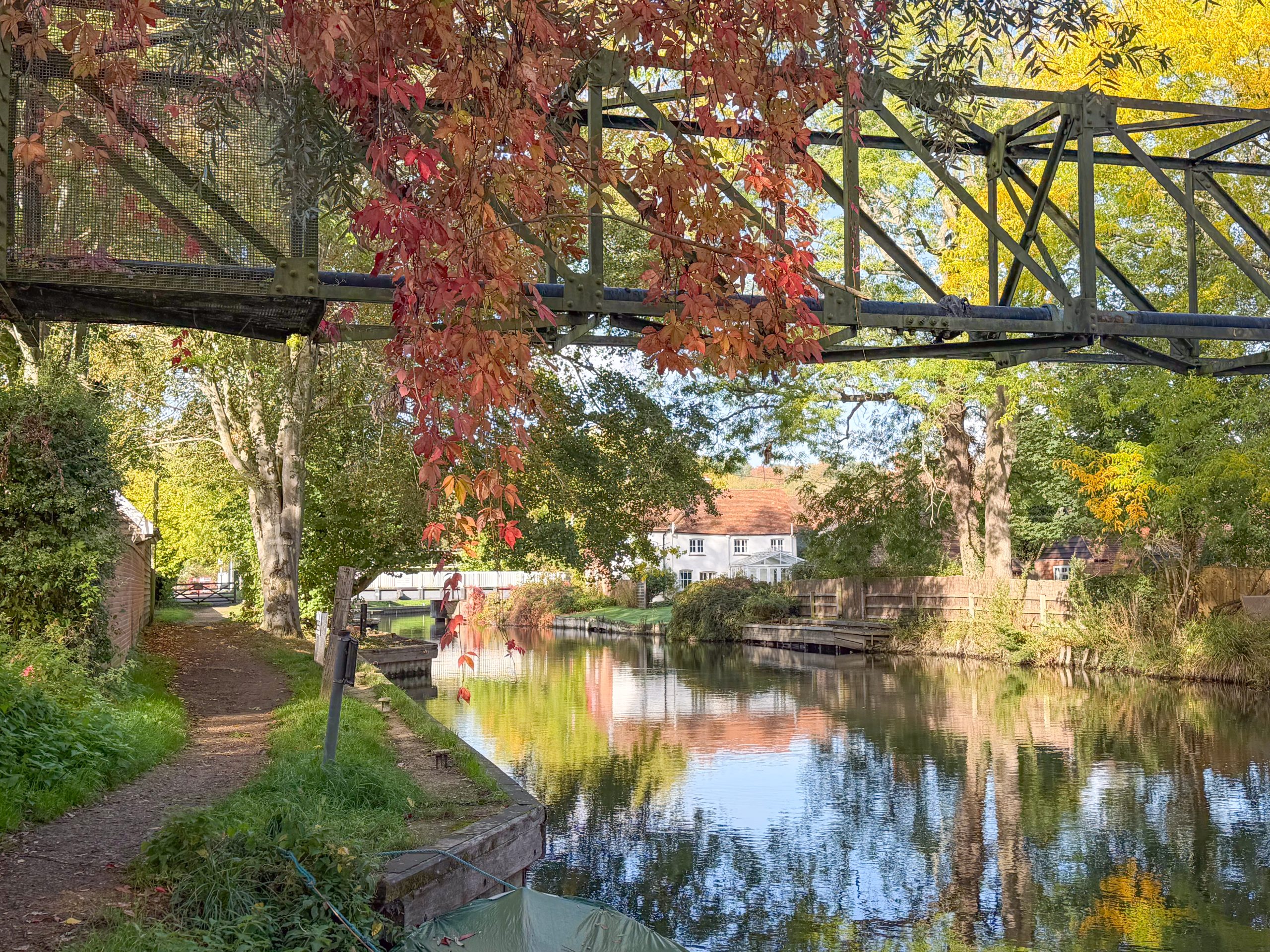
A friend asked me this whether I’d seen any roach in the Kennet on my dog walk today.
It was a simple question, but it stayed with me. It brought back memories of a river I once knew through a float, a landing net and an optimism that my angling ability rarely justified.
It also prompted me to do some reading. Were the fish really disappearing, or was I remembering everything through the forgiving haze of thirty-odd years? Was I right to simply blame Thames Water without any evidence other than I hate the polluting bastards.
Sadly, what I found suggested my fond memories of the Kennet were rather healthier than the river is now.
When the river did most of the work
Thirty-odd years ago, perhaps more, I could fish by the cattle drink at Woolhampton, near The Rowbarge pub, and catch 15 to 20 roach weighing between a 12 ounces and a pound and a half.
Beautiful fish. Silver flanks, red fins and enough weight to make landing one feel like an achievement.
I was an angler of only moderate ability, and even that assessment might encounter objections from anyone who watched me getting caught up in trees and getting inside spool tangles far too complex for anyone on the Krypton Factor. The truth is, Kennet was simply generous enough to make me look competent. Some days, the fish seemed to be participating out of sympathy.
Those afternoons were part of what made the river special. Watching the stick float trot through the cabbage looking weed, wondering when the roach would start feeding, then briefly holding one, admiring it then slipping it back into the micromesh keep net.
Those days are gone and, with them, much of the temptation to take up angling again as a later-life hobby. I had quite liked the idea of returning to it with the dog and a camera. There is something sad about reaching a stage when you might have more time for a return to the river, only to discover how much has been lost in the meantime.
A decline beyond my memory
Reading accounts from Reading and District Angling Association, I found descriptions of a decline stretching back decades, particularly below Newbury. The Kennet once supported substantial shoals of roach, chub, dace and barbel. Those working on its recovery describe much reduced populations today.
So this was more than the usual middle-aged suspicion that everything used to be better, including summers, pubs and the ability to get out of a low chair.
I had expected to find one obvious explanation. Instead, several pressures kept appearing, with a recurring concern: too few young fish surviving to replace the older ones. You don’t have to be Simon Reeve to understand that is bad news.
Nowhere safe to grow up
One of the most revealing things I read concerned shelter for the young fish.
From the bank, we might see flowing water and greenery and assume all is well. Apparently young fish need something more specific: quiet margins, weed beds and places where they can feed without being swept away.
In a 2019 account of the Kennet Roach Project, the fisheries manager ( a chap called Del Shackleford) described stronger spring flows associated with urban runoff, combined with a loss of sheltered habitat. Tiny young roach are particularly vulnerable when fast water arrives and there is nowhere suitable to escape it.
That helped explain how a river can still contain some impressive adult fish while struggling to produce the generation that should follow them.
The loss can happen gradually, without much to attract attention. A few fewer fish, a few fewer bites, until somebody asks whether you have seen any lately.
The canal connection
Another complication is the relationship between the Kennet and the Kennet and Avon Canal.
They share water at several points. The Kennet Catchment Partnership explains that boat movements stir up sediment and nutrients in the canal, which then enter the river where the waters mix.
Local fisheries managers link increased sediment following the canal’s reopening to cloudier water, silted spawning habitat and a decline in water crowfoot. Those flowing beds of weed provide cover and support the small creatures fish feed on.
A waterside scene can still look lovely in a photograph while conditions beneath the surface deteriorate. Unfortunately, the fish have to live in it rather than admire it from a pub garden.
A few million additional problems
Then there are signal crayfish.
I knew they were invasive. I had not appreciated the scale of their presence in the Kennet.
In 2024, the Angling Trust reported that a trapper working for Reading and District Angling Association had removed an estimated 2.5 million from the river over the preceding decade.
They eat fish spawn and aquatic invertebrates, while their burrowing adds sediment. The Trust identifies them, alongside siltation, as a serious pressure on the survival of new generations of coarse fish.
Even allowing for my historical talent for blaming everything except myself for a poor catch, that seems a fairly substantial problem.
The damage we do not always see
Pollution also features, although the picture extends beyond sewage alone.
The catchment partnership identifies sewage inputs, agricultural runoff and urban drainage among the pressures affecting the river. Excess nutrients encourage algae that can smother aquatic plants. Sediment damages riverbed habitat, and some pollution lowers oxygen levels.
There does not have to be a spectacular incident, with dead fish floating downstream, for a river to suffer. The places where fish feed, shelter and breed can deteriorate slowly.
That is perhaps what troubles me most. We can become accustomed to the absence. Each generation sees a little less and has less reason to suspect how much there once was.
What I remember as an ordinary afternoon’s fishing might sound rather unlikely to somebody starting now. For once, the angler’s story may need no exaggeration.
The Good News
There was encouragement in what I read, too.
A Kennet coarse-fish hatchery opened in 2024, using brood fish from the river to produce youngsters that can be reared through their most vulnerable stages before release.
Local clubs and conservation partners have also been working on habitat improvements, including shelters for juvenile fish and the addition of woody material and gravel where appropriate. The hatchery forms part of that wider effort to help the river recover.
There is something heartening about people putting in that work. They remember what the Kennet could support and are trying to give it the chance to do so again. also a friend of mine apparently saw a couple of chaps pulling in a fair few roach on that very stretch I mention.
A little reading has not made me a fisheries expert. I cannot put an exact share of the blame on each pressure, and the problems vary along the river. But I came away with a clearer understanding of how much has to work properly for a shoal of roach to exist.
And how casually we can take it for granted when it does.
Back to the cattle drink
I keep returning, in my mind, to those afternoons at Woolhampton.
At the time, I probably thought mostly about the next bite, whether I had brought enough bait and how to describe the catch in a way that implied considerable skill.
I did not imagine that, thirty-odd years later, the presence of those fish would seem more remarkable than catching them.
I would love to see that abundance return. Perhaps it might even tempt me back with a rod, although the roach would have little to fear from that development.
More than anything, I would like somebody else to sit by the cattle drink, watch a float disappear and discover a fine silver fish beneath the surface.
Then slip it back, expecting there to be another.
Just as I did back then.
- S Prev
- s
Got something to say?