Why Climate Change Deniers Don’t Actually Deny the Climate
Posted on July 27, 2026
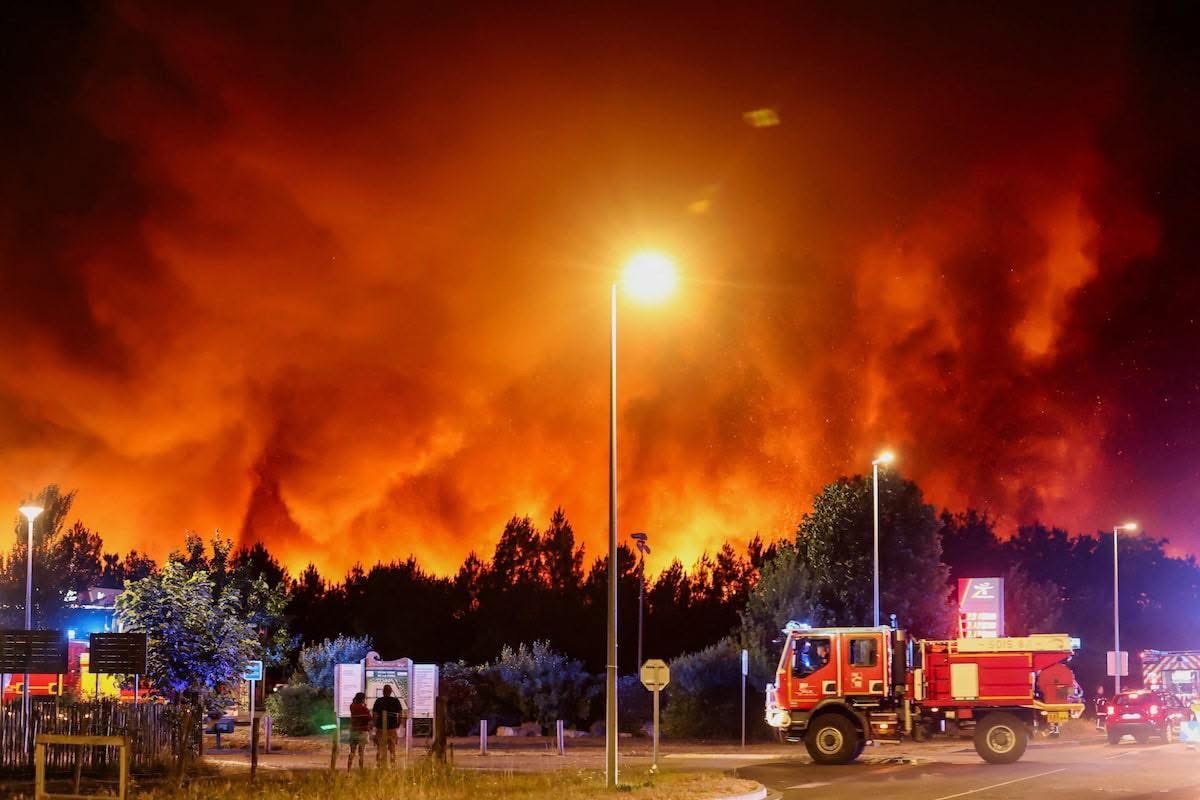
I’ve been doing a bit of reading into why some people refuse to accept climate change, and it turns out the answer is a bit more complicated than assuming they failed GCSE Science and have been quietly pissed off about it ever since.
The evidence suggests that, for many people, rejecting climate change has surprisingly little to do with the climate.
It’s about people.
The Inconvenient Inconvenience
Accepting climate change often means accepting that something might have to change.
Perhaps governments introduce regulations. Perhaps energy systems evolve. Perhaps we insulate homes, drive different cars or fly a little less.
Now, you might think the sensible response would be to debate whether those policies are good or bad.
Not at all.
For some people, the mere possibility of change is enough to conclude that carbon dioxide has somehow been stitched up by the MSM.
If the proposed solution involves cleaner energy, fewer emissions or thinking beyond next Tuesday, then apparently the atmosphere itself must be talking complete bollocks.
When Science Meets Politics
Somewhere along the way, climate science wandered into the culture wars.
Instead of asking, “What does the evidence say?”, the question became, “Which tribe does believing this put me in?”
Once that happens, facts become optional extras.
Thousands of climate scientists with decades of research suddenly find themselves losing an argument to a bloke wearing wraparound sunglasses in a Transit van who has just uploaded a twelve-minute video entitled What They DON’T Want You To Know!!!
Apparently the IPCC never thought to check Dave’s Facebook page.
Weather Isn’t Climate
One of the biggest misunderstandings is confusing weather with climate.
Weather is what happens outside your window today.
Climate is the average pattern over decades across the whole planet.
So when someone triumphantly announces, “Well it was freezing this morning!”, they haven’t disproved global warming.
They’ve simply confirmed that Britain still occasionally experiences weather.
And that they own a bloody coat.
The Dunning-Kruger World Championships
There is also something psychologists call the Dunning-Kruger effect.
It’s the tendency for people with the least knowledge of a subject to have the greatest confidence in their expertise because they don’t yet know enough to appreciate how complicated it really is.
Climate science draws on atmospheric physics, chemistry, oceanography, mathematics, satellite observations, computer modelling, statistics and decades of measurements.
Meanwhile, Keith has watched eleven minutes of YouTube while waiting for his bacon sandwich and has concluded that 40,000 scientists have overlooked something he spotted between adverts for cordless drills.
Experts usually say things like:
“The evidence suggests…”
“The probability is…”
“The confidence interval is…”
Keith says:
“Nah. Bollocks.”
Healthy Scepticism… and Then There’s Facebook
Distrust also plays a major role.
Governments make mistakes.
Scientists occasionally get things wrong.
The media can oversimplify.
All perfectly fair observations.
It’s just quite a leap from healthy scepticism to believing that tens of thousands of scientists in almost every country on Earth have secretly maintained the biggest fraud in human history for decades, yet Darren from Facebook uncovered it during his lunch break while demolishing a meal deal.
Fair play to Darren. He’s apparently achieved what generations of Nobel Prize winners couldn’t be arsed to do.
Welcome to the Algorithm
Social media has poured petrol on the whole thing.
Algorithms don’t ask whether something is true.
They ask whether you’ll click it.
So if you watch one video questioning climate science, you’ll soon be recommended another.
Before long, you’re living in an online universe where every heatwave is normal, every flood is a coincidence, every wildfire was started by activists, every weather station is rigged and every scientist is being secretly paid by the mysterious Global Wind Turbine Cabal.
Which, despite controlling the world, still can’t organise a decent website.
Sometimes It’s Easier Not to Believe
There’s also a human side to all this.
Climate change is huge.
It’s complicated.
It feels frightening.
And one person can feel powerless to do much about it.
Psychologically, it can actually be easier to convince yourself the problem doesn’t exist than to accept that it does.
Because if it’s all made up, there’s nothing to worry about, nothing to change and absolutely no chance that the people you’ve spent twenty years calling hysterical might have been onto something.
Nobody enjoys admitting, “Well… shit. Turns out they were right.”
You Can Disagree Without Denying Reality
Here’s the important bit.
Questioning climate policies is completely reasonable.
You can believe the planet is warming because of human activity while arguing against a carbon tax, opposing wind farms in a particular location or questioning whether a government policy represents value for money.
Those are political debates.
They’re worth having.
What isn’t really a scientific argument is deciding the science must be false simply because you don’t like one proposed solution.
That’s a bit like insisting gravity doesn’t exist because falling over is politically inconvenient.
So What’s Really Going On?
From everything I’ve read, climate denial is often less about climate science than about identity, politics, distrust, fear, overconfidence and, perhaps most of all, not liking being told what to do.
Which explains why another graph showing global temperatures probably won’t change many minds.
Especially when Darren has already shared a meme proving it snowed in 1963.
Well… fuck.
Pack it up, NASA.
- S Prev
- s
Got something to say?