Rod Liddle: A National Treasure, Apparently
Posted on August 6, 2026
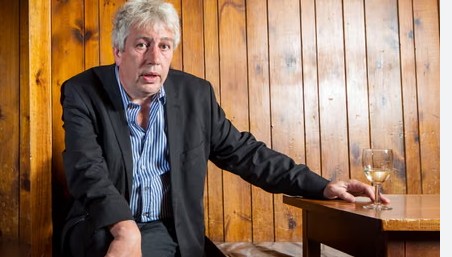
The Miraculous Conversion
Death does strange things to people’s memories.
Since Rod Liddle died, Britain appears to have discovered that it secretly loved every word he ever wrote. People who presumably spent Sunday mornings carefully preserving his columns in leather-bound volumes have emerged from everywhere to tell us that he was fearless, brilliant, hilarious and, naturally, a national treasure.
It has been quite a transformation.
Only last week, many of these people had probably never knowingly read anything by Rod Liddle. Some of them may not even have known who he was. Then they heard that he was a right-wing agitator who enjoyed upsetting liberals, minorities and anyone else likely to complain, and suddenly they were lifelong admirers.
“He said what everyone was thinking,” they declared, despite only finding out what he had been thinking after he died.
I have a suspicion that a fair number of the gushing tributes came from people who had barely heard of him until his death. Once they discovered he had a reputation for being an unpleasant right-wing agitator, they immediately attached themselves to his legacy.
For some people, finding out someone was a cunt is now enough to make them a hero.
The Sainting of Saint Rod
The posthumous polishing process is now well under way.
Anything unpleasant has been carefully repackaged as “fearlessness”. Cruelty has become “irreverence”. Prejudice has been promoted to “common sense”, while deliberately provoking people for money is apparently the same thing as speaking truth to power.
Liddle was a competent columnist. He knew how to construct a readable article, locate a grievance and prod it until the complaints arrived. That is a skill, I suppose, although so is unblocking a toilet.
He was not some great philosopher battling heroically against the establishment. He was closer to a shock jock with a typewriter, producing incendiary articles about whichever group of people he had decided not to like that week.
Sexuality, ethnicity, religion, political ideology. Everyone got a turn. It kept the readers angry, the complaints department busy and the cheques arriving.
That is not intellectual bravery. It is a business model.
The Inconvenient Footnotes
The tributes tend to glide rather elegantly past some less attractive details.
There was the police caution for common assault following an incident involving his pregnant girlfriend, although Liddle later disputed the circumstances and said he accepted the caution simply to secure his release.
There was also his extraordinary published remark that he had not become a teacher because he could not imagine refraining from trying to have sex with the pupils.
Even judged as an attempt at provocative humour, it was the sort of statement most people would prefer not to have floating around beneath their obituary, or on their gravestone. ‘Rod Liddle – Much Loved – Fantasised About Fucking Kids’.
Yet this is all apparently irrelevant now because he once wrote something rude about a politician someone disliked.
It appears that death does not merely forgive sins in modern Britain. It converts them into lovable personality traits.
Bullying becomes robustness. Nastiness becomes honesty. Saying something revolting becomes evidence that you were brave enough to challenge the establishment, even when the target was nowhere near the establishment.
The Brotherhood of the Fearless
Perhaps it tells its own story that many of those eulogising Liddle are themselves people who enjoy intimidating, humiliating or abusing others. They recognise something familiar in him. “Liddle was a cunt as well, I feel better about being an arsehole now”.
There are also the new recruits who have attached themselves to his memory only after discovering what an arsehole he could be. For them, that is not a flaw. It is the main attraction. We seem to have developed a peculiar new British trait: being proud to be a nasty fucker, not the champions of an underdog.
Kindness is now a weakness. Common decency is woke. Empathy is performative virtue signalling. However, spending your career sneering at people is “fearless commentary”.
The nastier the behaviour, the more courage it takes to be fucking horrible.
It is no longer enough simply to disagree with someone. You must humiliate them, abuse them and preferably make their life miserable, even drive them to suicide, like that other cunt, Littlejohn did. Then you can congratulate yourself for being one of the few people brave enough to say what everyone else is supposedly thinking.
Being unpleasant has become a personality. For some, it has become an entire political ideology.
An Equal-Opportunities Offender
Liddle’s admirers often defend him by saying he offended everyone. Is that supposed to make it all right?
It is the journalistic equivalent of claiming that punching everyone in the pub proves you are a fair-minded chap.
There is also a difference between mocking powerful institutions and repeatedly selecting groups you know will generate outrage. One is satire. The other is poking people with a stick and mistaking the resulting noise for evidence of your importance.
Liddle could write competently enough. He understood his audience, knew which buttons to press and rarely missed an opportunity to press them.
However, being good at winding people up does not make someone a great writer. It makes them good at winding people up. I could do that, so could anyone reading this blog. All you need is a basic grasp of English and a typewriter to be a total cunt.
Let’s get real here about Liddle’s talent for provocation. Jeremy Kyle was good at provoking arguments as well. Nobody mistook him for George Orwell.
The Courage to Punch Down
The word most often used in these tributes is “fearless”. It is the type of word that makes me want to throw up.
Fearless is an interesting description for someone who repeatedly took aim at groups already routinely abused in public life. What’s fearless about going after transexuals or Muslims?
It does not take much courage to attack people your readers already have an irrational dislike of. There is little personal risk in writing something inflammatory about immigrants, gay people, Muslims, left-wingers or whichever minority has been selected for that week’s outrage cycle.
You write the article. The audience cheers. The editor counts the clicks. Everyone goes home pleased with themselves.
Real courage is challenging your own side. It is telling your readers something they do not want to hear. It is risking popularity rather than carefully manufacturing outrage for people who have already paid to agree with you.
Liddle generally knew his market. He supplied the outrage. They supplied the applause that allowed him to be a self-important bell end.
The Great British Beatification
The official story of Rod Liddle is now being settled. Rod Liddle was fearless. Rod Liddle was unique. Rod Liddle could never be replaced.
The last claim may be true, although Britain currently has no obvious shortage of middle-aged men being paid to provoke people they dislike. We could acknowledge that Liddle was a competent columnist without pretending every target deserved the kicking.
We could accept that he occasionally wrote something amusing without canonising the entire output. We could recognise that a man may be loved by his family and friends without demanding that the entire nation joins in his beatification.
Instead, we will perform the usual ritual.
The unpleasant remarks will become mischievous jokes. The personal conduct will become colourful eccentricity. The calculated hostility will become courageous honesty.
And people who had barely heard of him last Thursday will spend the weekend mourning the death of their favourite writer.
Rod Liddle is dead.
Long live everything people have suddenly decided he represented.
Got something to say?